B2B customer acquisition costs (CAC) have risen 60% in the last five years, and no industry is an exception, especially not cleantech.
The questions in the boardroom are the same everywhere — why does it cost this much to get a customer, how long until the business earns that back, and where does the next dollar actually move the needle.
Marketing looks at sales, sales looks at marketing, and the board wonders if they hired the right people. It’s clear the system driving those costs up has a few points of failure. But fortunately, so does the fix.
After years of watching this play out across cleantech as a B2B marketing specialist, I’ve narrowed it down to three moves, one per stage.
(Spoiler alert: none of them require more headcount or more budget).
It’s All Connected, For Better or Worse.
Picture a board meeting. Marketing had, against all odds, done everything right. Lead volume, qualification rates, and brand awareness were up, while ABM engagement was mapped to pipeline progression. By every measure on the deck, the team had delivered.
Then comes time for Sales to open the pipeline coverage. Suddenly, Marketing's metrics looked a lot less impressive. Benchmark comparisons showed a 62% drop, CAC had grown 40% year over year, and the CEO confirmed the payback period had moved from 14 months to 22.
The room goes quiet for a moment.
Then the usual hands go up, and everyone reaches for the same old playbook: “More leads”, “A better SDR team”, “A budget shift from brand to performance” (or from performance to brand, depending on who was talking), and “A new attribution tool”. But the problem with all of those answers is that they're asking the wrong question.
The team wasn't failing at any of those things in isolation. The failure was at the systems level, and for a B2B cleantech marketing strategy to work, those connections have to be visible.
Two Things About Compound Interest.
The first is that it grows more powerful with every compounding event. CAC doesn't exist in isolation, and the chain connecting it is longer than most teams account for.
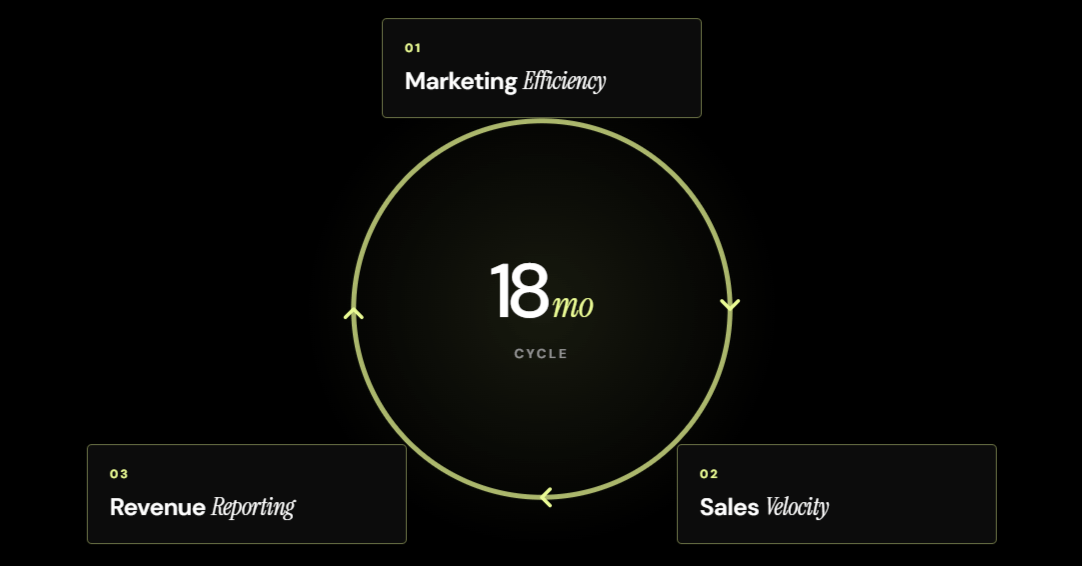
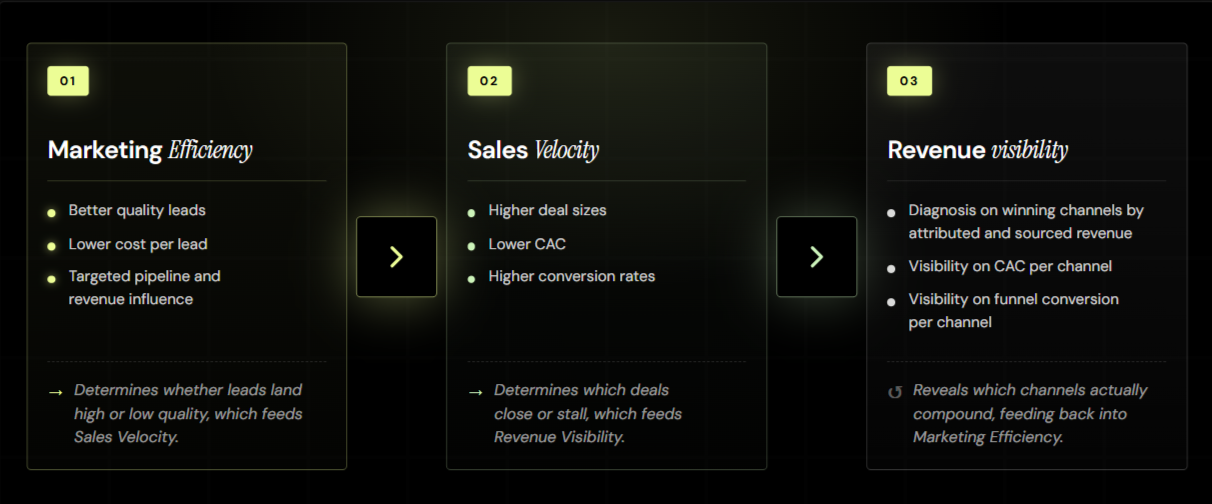
Marketing spend shapes lead quality, while lead quality shapes how well sales follows up. That follow-up shapes pipeline velocity, which shapes close rate, which shapes revenue, which then shapes customer acquisition costs.
Another way of looking at this is through the following three disciplines. When one breaks, the next breaks harder.
The second thing about compound interest is that it simply takes time to work.
In cleantech, where deals already take 9 to 18 months to close, the math has more time to accumulate.
"Compound interest is the eighth wonder of the world." — Albert Einstein
The CAC problem is: right now, for most cleantech teams, it's compounding in the wrong direction.
Recovering Waste Through Marketing Efficiency.
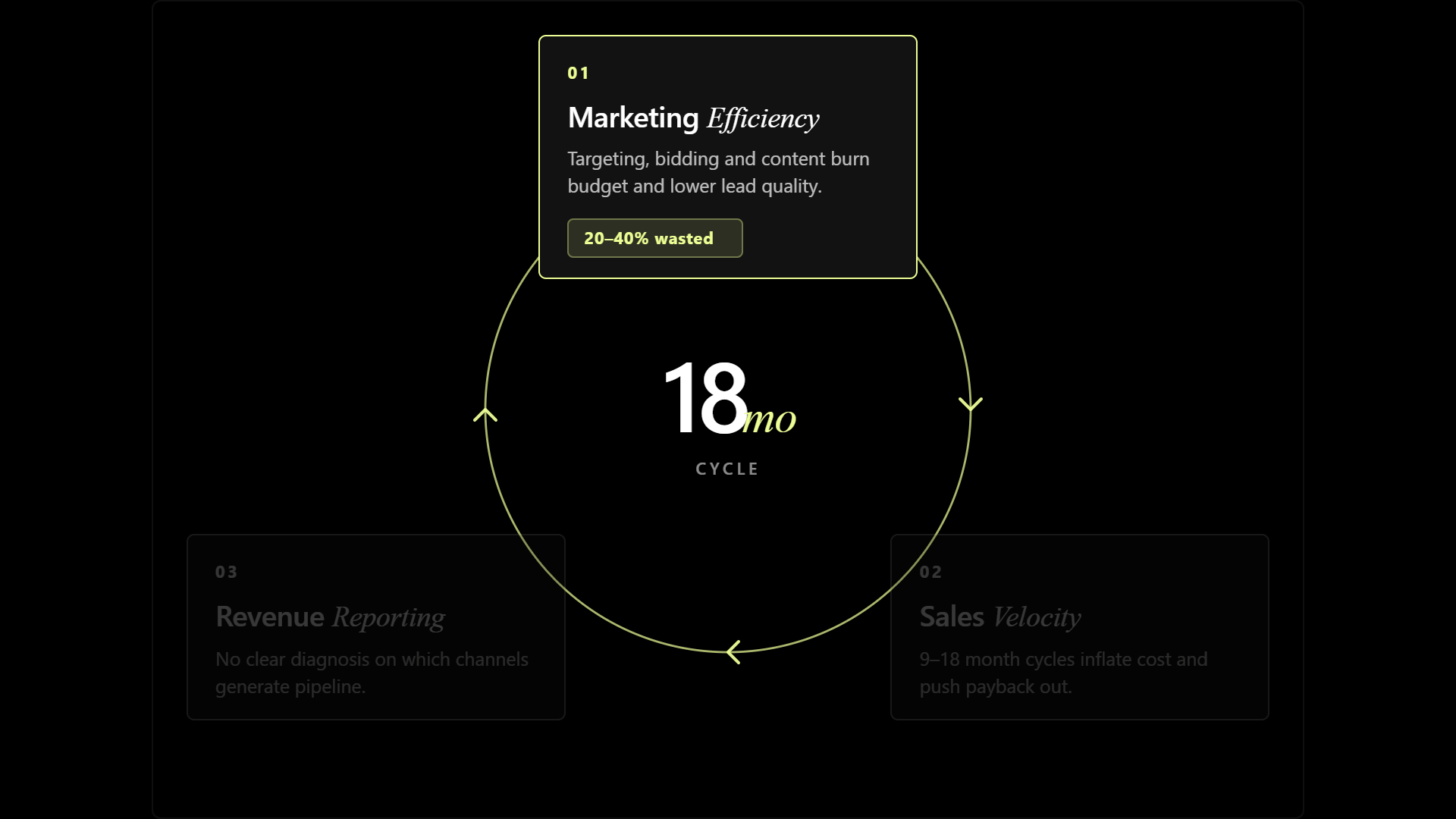
Every ad platform is built to spend money. When platform incentives meet advertiser error, industry research puts average B2B digital ad waste at around 40%.
In practice, we've seen that number go as high as 62% in audits we've run, and most of it traces back to three places.
- Targeting is where money disappears before a single qualified lead enters the pipeline. Default audience expansion settings push spend toward audiences that were never the target.
- Bidding is where platforms extract the maximum by design. LinkedIn's default delivery recommends $25 a click against utility decision-makers, but those defaults exist to optimize platform revenue, not advertiser outcomes.
- Creative is the most misunderstood lever of the three. Not all creatives are treated equally by platforms. Getting the wrong inventory, wrong objective, or wrong format can cost 80% more than it should for the exact same result.
I learned most of these the hard way, over eight years of running B2B paid media.
That’s why we turned some expensive lessons into our zero-waste paid media checklist, which walks you through all the major mistakes.
Shortening the B2B Sales Cycle.
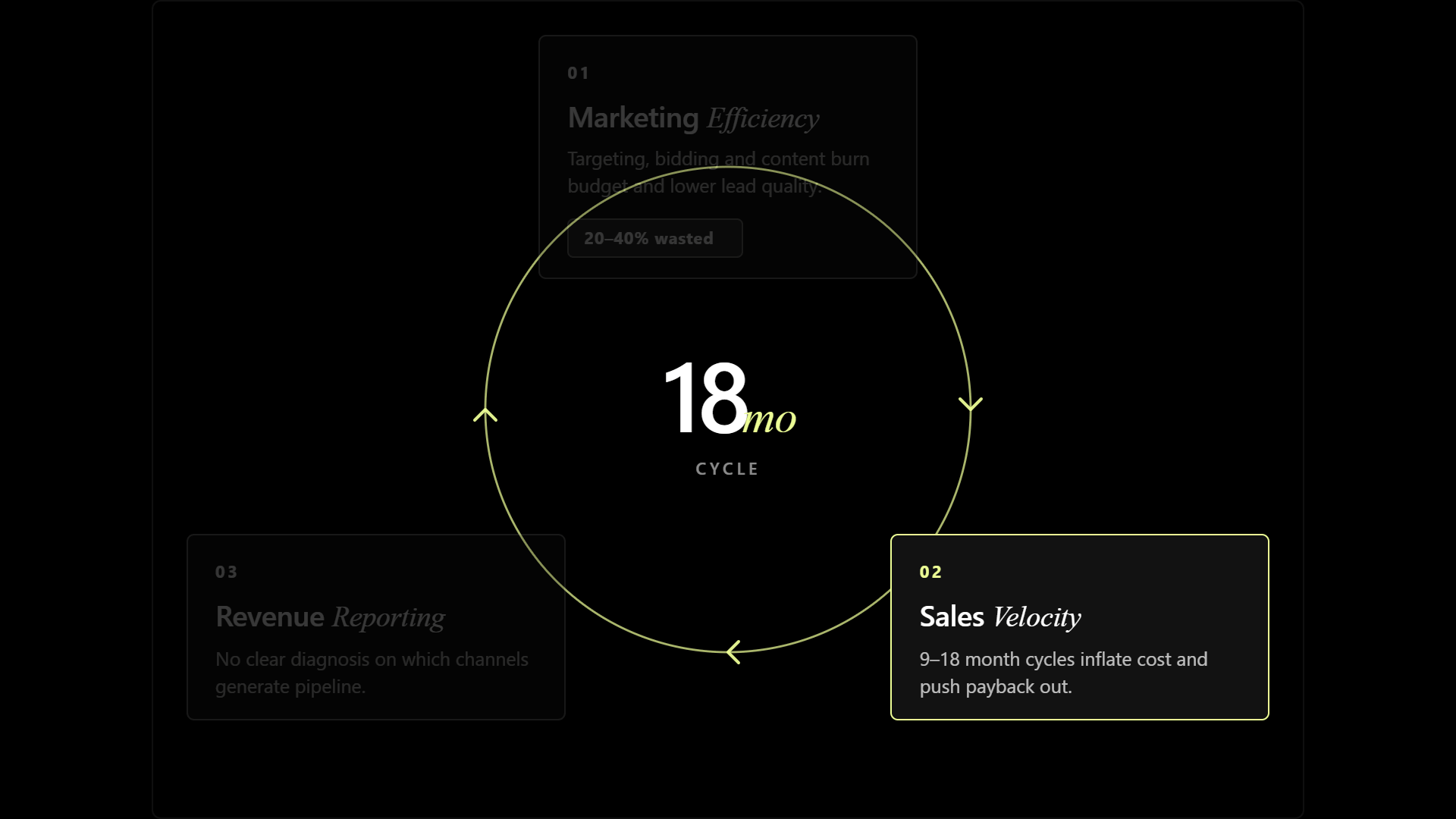
The average cleantech B2B deal takes 9 to 18 months to close. In SaaS, that timeline would trigger a board-level intervention. But in cleantech, it's just the baseline.
When the sales cycle is structurally that long, every misallocated dollar compounds. CAC rises, payback periods stretch toward 18 to 24 months, pipeline coverage becomes unreliable, and forecast accuracy deteriorates. Demand here follows regulatory calendars and permit timelines, not buyer intent.
The standard response is usually more — more outbound, more SDRs, more content, and more cold email sequences with sub-1% response rates. For a resource-constrained team running a 14-month sales cycle, that math doesn't work, and the runway burns faster without improving the underlying odds.
By the time lagging indicators (revenue vs. target) reveal the problem, it's already too late to trace symptoms back to causes.
Revenue Reporting and the B2B Marketing Attribution Problem.
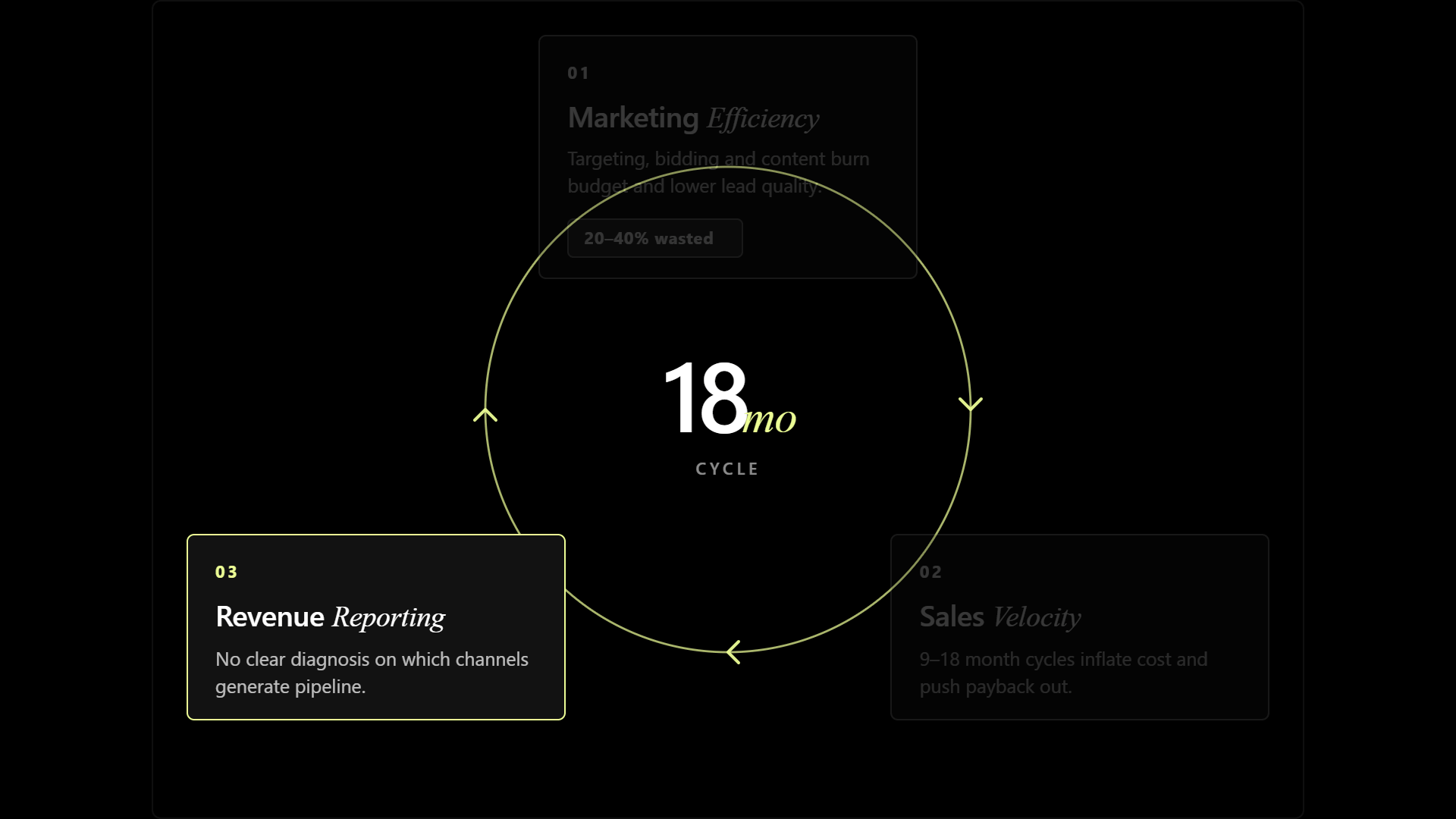
Where is CAC highest? What channels produce the fastest deals? Which funnel has the lowest conversion rate to revenue? The answer to these questions sits in how revenue influence gets attributed.
67% of B2B teams still rely on a last-touch marketing attribution model, crediting only the final click before conversion. Meanwhile, 90% of B2B buying journeys had already started before that moment.
That gap between what the data shows and what actually happened feeds back into budgeting decisions, which feeds the marketing efficiency problem, and the loop starts all over again.
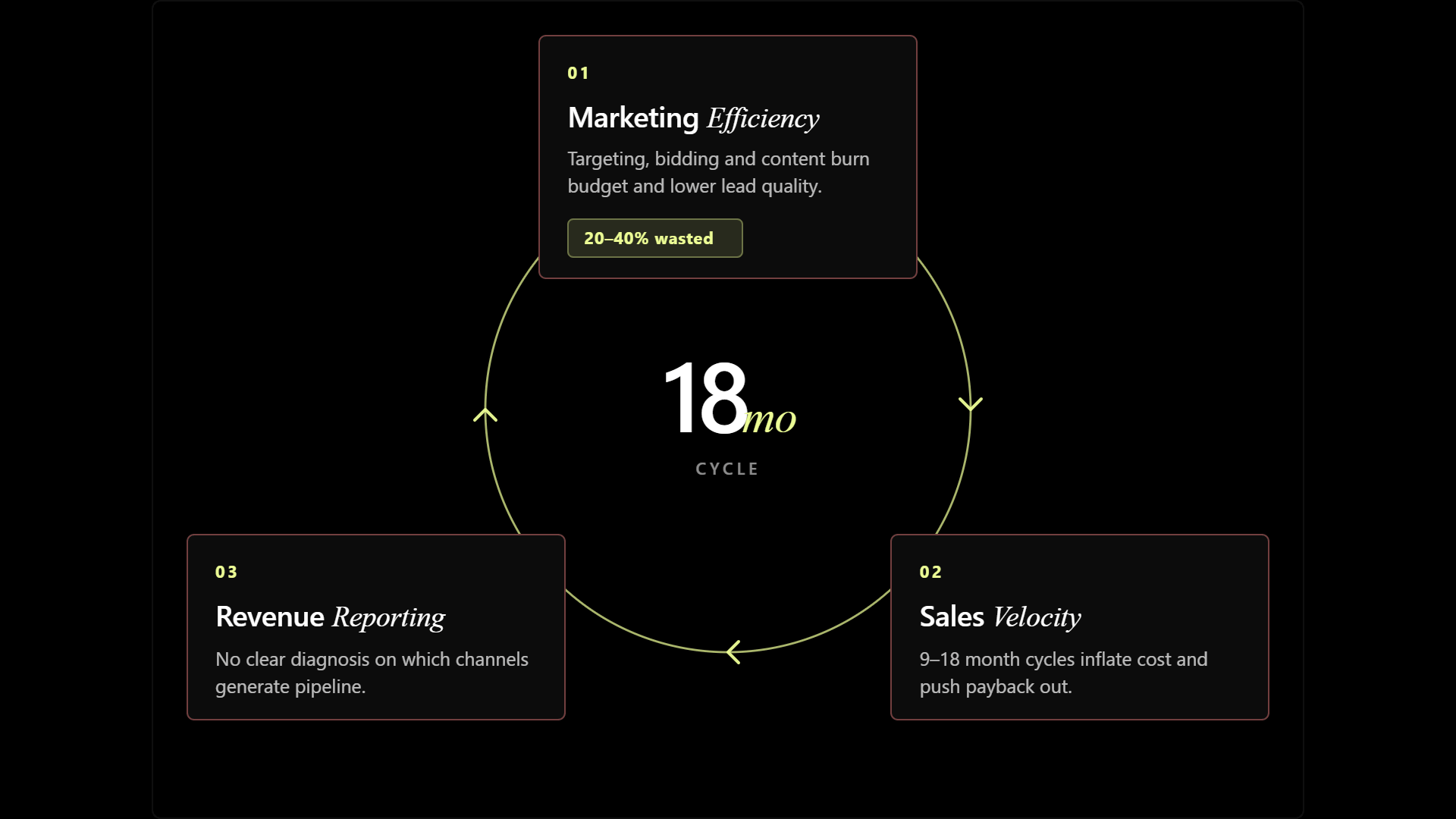
Each cycle produces worse data, worse leads, slower deals, and a board that trusts the team less, but that same compounding effect works in both directions. Einstein's quote has a second part:
"He who understands it, earns it; he who doesn't, pays it."
The question is which side of that line your business ends up on.
The Loop That Compounds For You.
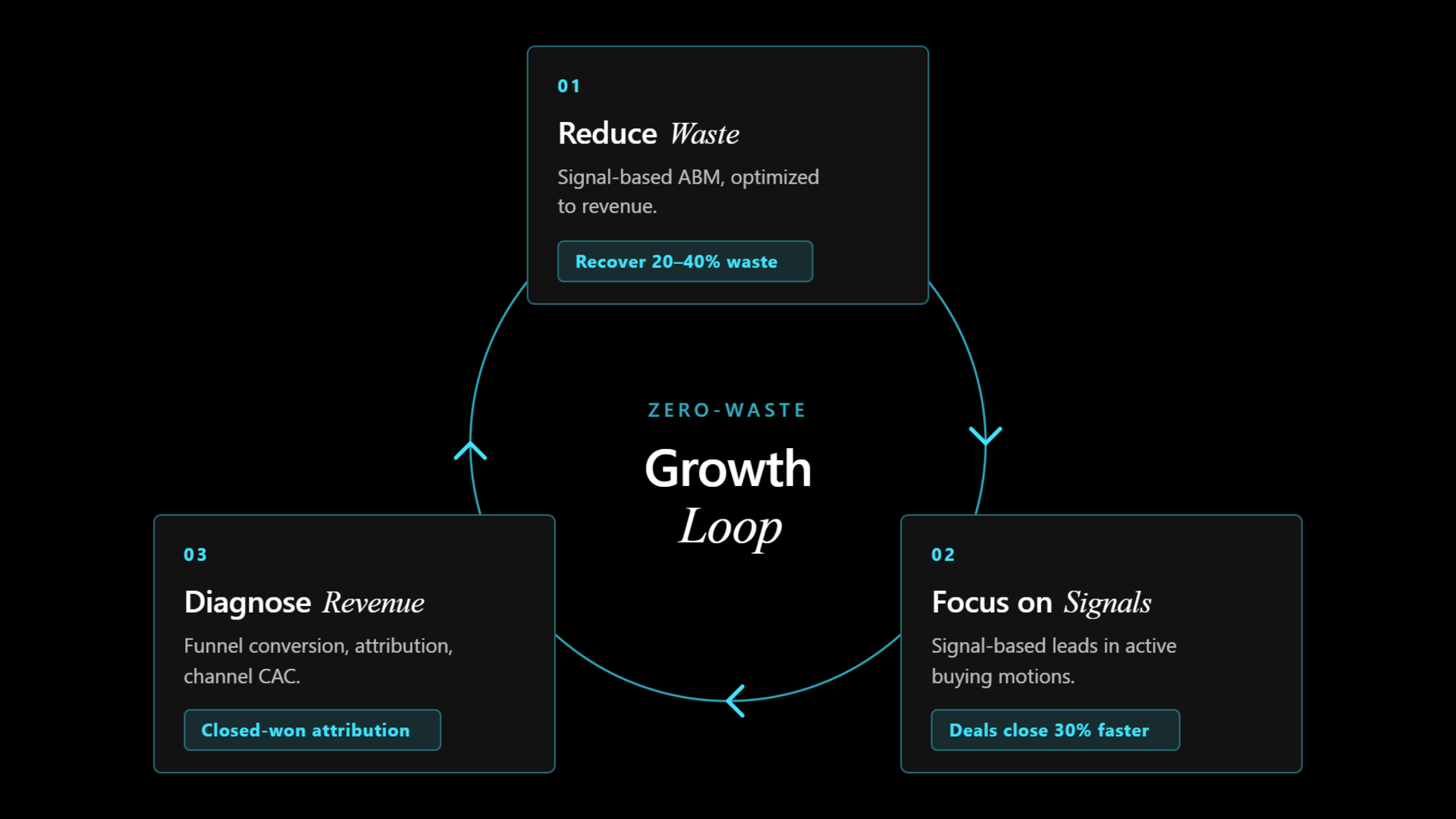
The same mechanism that compounds against us is the one that compounds for us. Once we flip, each cycle produces higher close rates and clearer attribution on what is working.
Here’s how we prioritize these opportunities.
1. Start with Channel Optimization (focus, not volume).
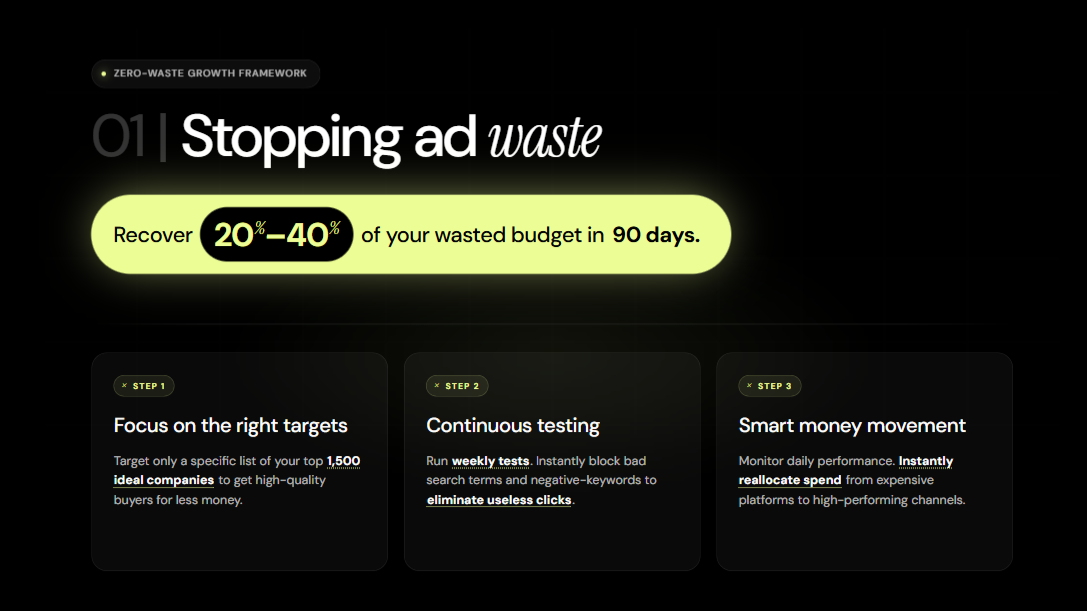
The first move is to reframe your ads as a precision engine. You don’t need to spend more, you just need to recover the waste within the existing system.
These are the ones we start with.
- On LinkedIn, default settings will waste at least 20% of budget before a single qualified lead enters the pipeline. Build account lists and upload them directly instead. We also strongly advise disabling audience expansion and excluding irrelevant titles and seniorities.
- On Google, layer negative keywords aggressively, use phrase match instead of broad match, and shift the brand and non-brand split closer to 20/80 in favor of non-brand. Brand search is paying for traffic that was already coming.
- On bidding, the auctions are designed to make you pay more. LinkedIn's default delivery recommends $25 a click, but Manual CPC at $10 to $12 buys the same audience at a 60% discount.
Share the zero-waste paid media checklist with your team before the next campaign goes live. The full operational breakdown of every platform is in Part 3 of this series.
2. Show Up When the Door's Open.
In 2025, 6sense tracked 4,000 B2B buyers and found that more than 60% of the buying journey is complete before a vendor gets contacted. That means the winning vendor is already on the shortlist 90% of the time before the first demo is requested.
By the time a prospect reaches out, the decision is nearly made. Here, timing is everything.
There's no point knocking when nobody's home. And even if someone is home, you should never arrive unannounced. That’s why marketing and sales need to gather around signals, finding houses where people are already home and looking for help.
The good news is, unlike legacy SaaS, where intent stays hidden until the buyer self-identifies, cleantech purchasing decisions leave public traces. Some signal categories we've found work best:
- Regulatory and enforcement triggers.
A new EPA enforcement action can create six qualified opportunities in a single month. The same logic applies to a state interconnection ruling, which can open a cooperative market overnight, or a CSRD reporting deadline that triggers procurement urgency. - Procurement signals.
Active RFP and RFQ publications, utility supplier tenders, and procurement portal activity. Look for public bid documents that name the buyer, the budget, and the timeline. - Hiring signals.
A utility posting a Grid Modernization Program Manager role is announcing, on a public job board, that an internal buying motion has started.
All of these exist in public filings, regulatory databases, procurement portals, and LinkedIn. The problem is most cleantech sales teams aren't organized to monitor, interpret, or act on these signals systematically.
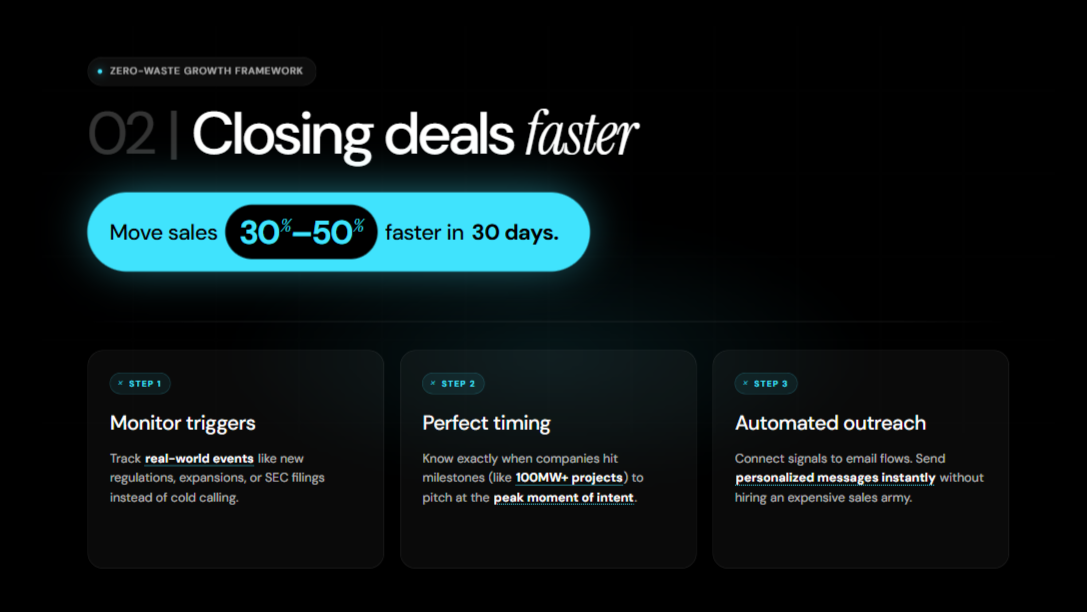
Reaching an account during an active procurement window is the difference between a sub-1% cold response rate and a conversation that opens with the buyer already carrying internal urgency.
Same outbound, but 30-50% faster movement through the pipeline.
---------------------------------------------------
Want to see which of your target accounts are showing active buying signals?
Our GTM Diagnostic includes an assessment of your market's signal potential. Receive a scored report showing where the highest-leverage opportunities sit. Request yours at cleantechgrowthlab.com/contact
We've also written a full series on buying signals for energy tech.
---------------------------------------------------
3. Build Revenue Intelligence Through the Right Questions.
When it comes to marketing, most teams have one question in mind: “did it work?” The answer is always yes or no depending on the month, but that tells you almost nothing.
The right questions are different. What do buyers' journeys actually look like? And what's really influencing them along the way?
It usually goes like this: LinkedIn builds awareness over six months, Google captures intent when the buying window opens, and outbound closes the deal. However, last-touch gives all the credit to that final branded search, LinkedIn looks like it's doing nothing, and the budget gets cut. Six months later, the pipeline dries up.
From the Chief Revenue Officer of a paid media client:
“We got a lead from Hubspot who I had an hour call with, and they are interested in going to a trial. I asked during the call how he heard about us:
1. He was scrolling through LinkedIn and saw one of our ads which drove him to our website.
2. He was very complimentary of our website and content.
3. He spoke to his boss in Houston yesterday and he also said that he had heard of Kathairos and our N2 solution for pneumatics through LinkedIn.”
None of this is reflected in the CRM because tracking was disabled by the user (as it is around 70% of the time). A third-party attribution tool like dreamdata.io, hockeystack.ai, or fibbler.co makes this visible, but the tool is only as useful as the questions being asked of it.
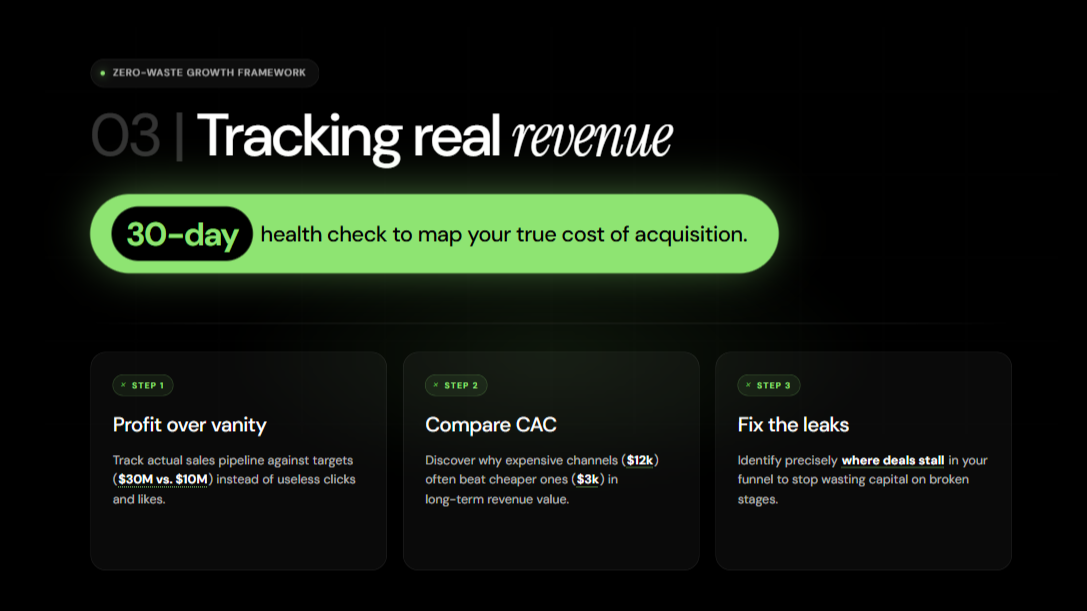
Which channels source pipeline, and at what cost per qualified opportunity? Which channels influence deals already in the pipeline, and what's that influence worth in close rate and velocity? When marketing touches a deal that outbound closes, what was that touch worth?
Three actions that cost nothing but attention:
- UTM discipline.
Every channel, every campaign, every asset tagged consistently, with the tags carried into the CRM. - First-touch and last-touch tracked side by side for 90 days.
A spreadsheet is enough to start. The contrast between the two views is more actionable data than most teams have ever had. - A working definition of "influenced."
What does it mean for a channel to touch a deal without closing it? Until the team agrees on this, the attribution debate is unwinnable.
When this layer works, the picture gets clearer with every cycle. You learn which accounts, which titles, and which channels produce deals at what cost and at what speed. Budget allocation gets sharper, targeting tightens, the next quarter's leads are better than this quarter's, and the loop closes the right way.
The board meeting from the opening of this piece also changes. The Head of Marketing doesn't point at a dashboard, nor does the CEO ask where the leads went. The answer is in the room.
This kind of visibility gives you the power to make Einstein go:

The Move This Week.
Start today. If you just make these changes, one per stage, you’ll be moving the system in the right direction.
- Marketing: cut one default.
Disable audience expansion on the top LinkedIn campaign, or add 20 negative keywords to the top Google campaign. Measure the difference. - Sales: pick a signal.
Pull up the closed-won deals from the last 12 months and look for patterns. Regulatory triggers, procurement notices, hiring signals, whichever shows up most. Build a list of five accounts showing that same signal right now and work them. Five is enough to see whether the pattern holds.
- Executive: standardize UTMs end-to-end.
Do this for 90 days. A spreadsheet is fine. The goal is to see first-touch and last-touch side by side for every deal that closes in that window.
None of these moves will fix CAC on their own. But together, they start the loop turning the right way.
For a cleantech team driving toward net zero, every dollar that doesn't get spent acquiring a customer is a dollar that stays inside the work. That’s infrastructure getting built, methane that doesn't get vented, or even a grid event that doesn't happen.
CAC efficiency is mission efficiency.
---------------------------------------------------
Stay tuned for Part 3 of this series, The Cleantech GTM Performance Stack, which goes deeper on the operational layer. Every platform default, every paid media strategic move that compounds.
To see which of your target accounts are showing active buying signals right now, request a GTM Diagnostic. You receive a scored report showing where you stand relative to competitors and the highest-leverage opportunities sit in your market.
Stay in the loop
Follow us on LinkedIn for more industry insights and resources to help increase your ROI.