This is Part I in the Gridtech's Moneyball 3-part series:
- Part I: What utilities buy
- Part II: 5 Utility buying signals
- Part III: Signal into strategy
---
“We built something great. Why won’t utilities adopt it?
Every grid-tech founder knows the sinking feeling of building something great but still, despite clear value created, having pilots going nowhere.
Adoption in gridtech moves at the utility's pace. Sometimes this is glacial, sometimes fast. And sometimes great innovation dies in the queue. This means higher customer acquisition costs, slower sales cycles, and lower return on GTM investment.
Traditionally, these challenges have been overcome by working harder on relationships, trade shows, and RFPs. With limited data available, this often meant moving on feeling and just as sales momentum builds, a new regulation or reorganization could send everything back to zero.
We're at a moment where this is all changing, because a few leading teams have learned to play the game differently. Today we're going to listen to their story.
We'll look at how they are pulling breadcrumbs (data) from public filings, dockets, hiring patterns and grant awards in a way that helps them move in sync with market opportunities. Utilities don’t move at random; they move with well-coordinated, publically shared signals.
“This is gridtech’s Moneyball moment.”
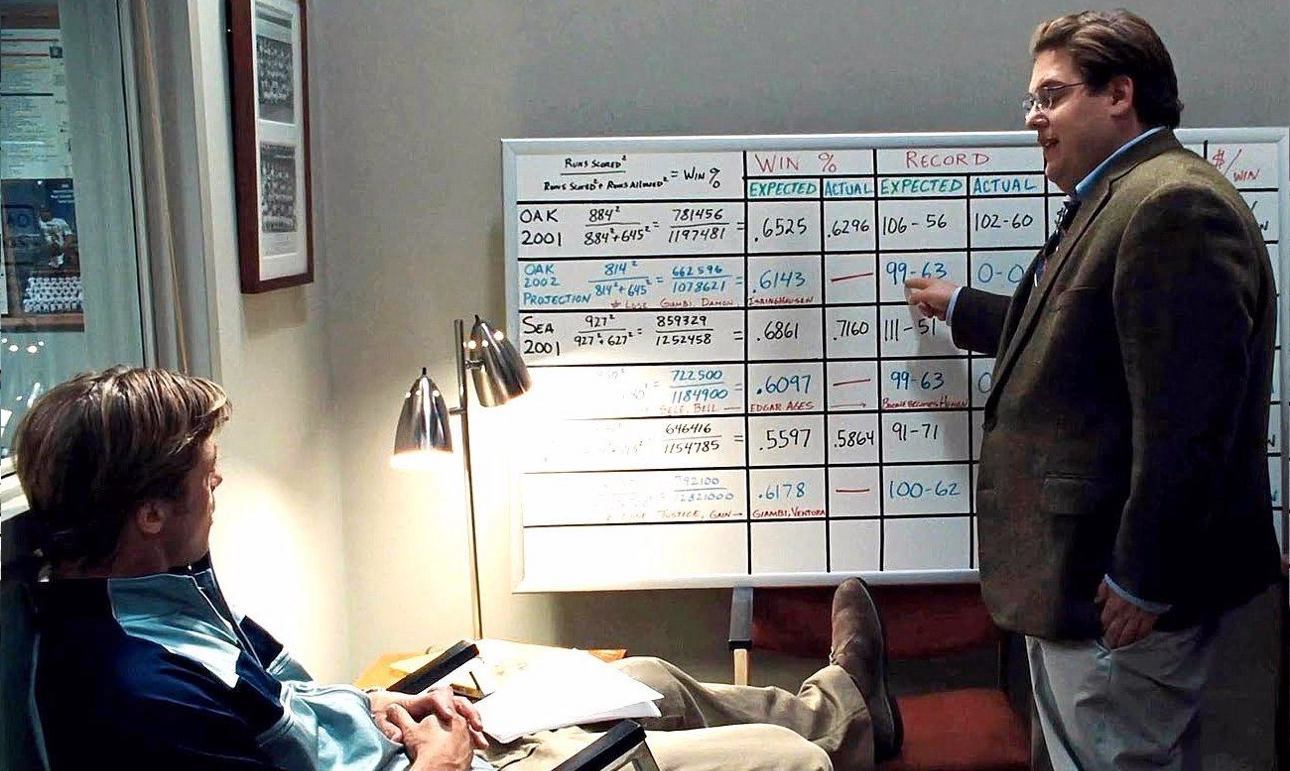
The movie "Moneyball" tells the true story of how a baseball team, the Oakland A’s, used data analytics and unconventional thinking to build a competitive baseball team on a limited budget.
It’s a story about challenging tradition with evidence and a powerful display of how data can redefine what success looks like, changing the efficiency of a game for decades into the future.
Moneyball made it possible for a small team with limited resources to soar above the incumbent competition.

So what does this mean for us? Our data story, told by public filings, dockets, hiring patterns, and grant awards, all form the “box-score” of utility buying movements.
The teams that have achieved a mature signal stack can read these, find pilots faster, and improve efficiency in their marketing and sales efforts.
In the next 3 articles, we'll show you exactly how they do it.
But, before any signal can be acted on, we’ll need to make sure our product speaks a language that utilities can buy.
Ready? Let's get into it.
Translating Product Speak into something Utilities can buy
Most grid-tech teams sell features, where utilities buy risk reduction.
And because innovation sounds like risk to utilities, most new products in the market need to actively overcome this risk on behalf of their buyers.
The disconnect in the language spoken between gridmod startups and utilities is often the first and most critical base to cover, even before tuning into the right signals. It can take a sales conversation from disconnected feature drops that pushes buyers away:
“We provide real-time grid visibility, advanced analytics, and machine learning systems for the utility of the future.”
... into messaging that aligns with utility buying reality:
“When an outage happens, you know about it before the customer does. Let's look at how we make that possible."
Until your product can be seen as low-risk in language that matters to operators, you’re asking them to buy on faith. That means we need to communicate in critical areas like standards fit, regulatory timing, and most importantly: operational workload.

Utilities operate inside one of the most complex buying environments in the world. This means procurement often moves through operations, regulatory compliance, cybersecurity, and public communications before making it to the CFO.
Winning deals in this world means speaking to utilities in a language that translates across departments.
Defining a language utilities can buy
For any new technology to be adopted, its benefits must be expressed in the values, processes, and standards that utilities already live by. There are 3 principles in product translation that govern this:
- Standards that become compatibility.
- Security that becomes compliance.
- Speed that becomes workload relief.
We’ll explore these principles with examples from a DER telecommunications solution (Loopback Systems) that adopted them.
1) Translate features into real operational compatibility
When assessing a pilot, a utility’s first test is simple: will this fit my system?
To pass it, innovation must be described and built in the same language utilities use, such as protocols, data models, and integration rules. Converting features and capabilities into operational compatibility often means aligning to established standards.
In Loopback’s case this means calling out compatibility with IEEE 1547, DNP3, or IEC 61850 compliance, and showing how data points map directly into existing SCADA architectures.
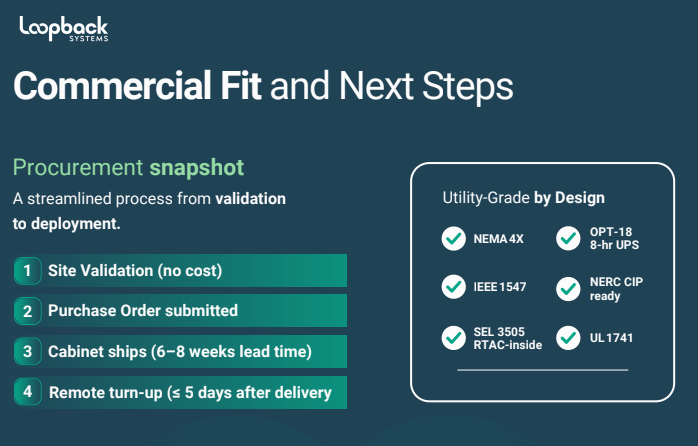
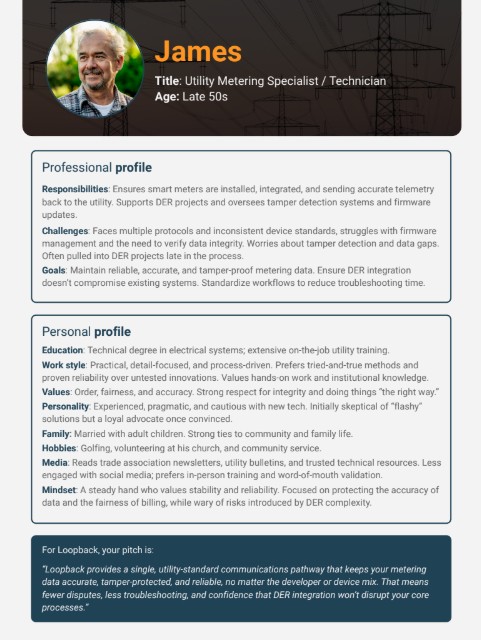
This becomes a form of reliability that utilities could understand: fewer truck rolls, less downtime, predictable integration, and known test procedures.
2) Translate claims into specifics: name the audit you help them pass
While “end-to-end encryption” sounds strong, utilities don’t evaluate security in absolutes. They start with evidence: how a system supports regulatory and operational continuity.
The real value isn’t “military-grade security.” It’s something more practical: no red flags in the next audit cycle.
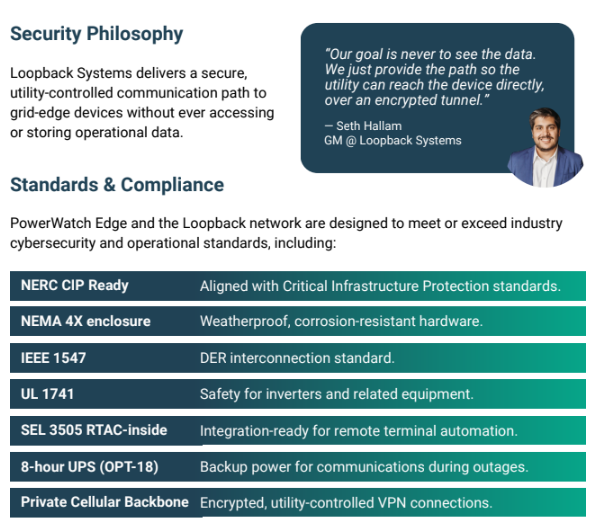
Define firewall rules, secure tunnels, failover logic, and log retention so they align with real audit processes. Provide each deployment with a pre-approved tunneling configuration, audit-ready logs, and a commissioning checklist designed to fit directly into a NERC CIP review.
3) Translate speed into workload relief
Utilities value speed, but only when it reduces operational load.
The principle: translate efficiency into resource relief for specific departments. A rapid deployment is only valuable if it shortens their queue, saves engineering hours, or reduces regulator back-and-forth.
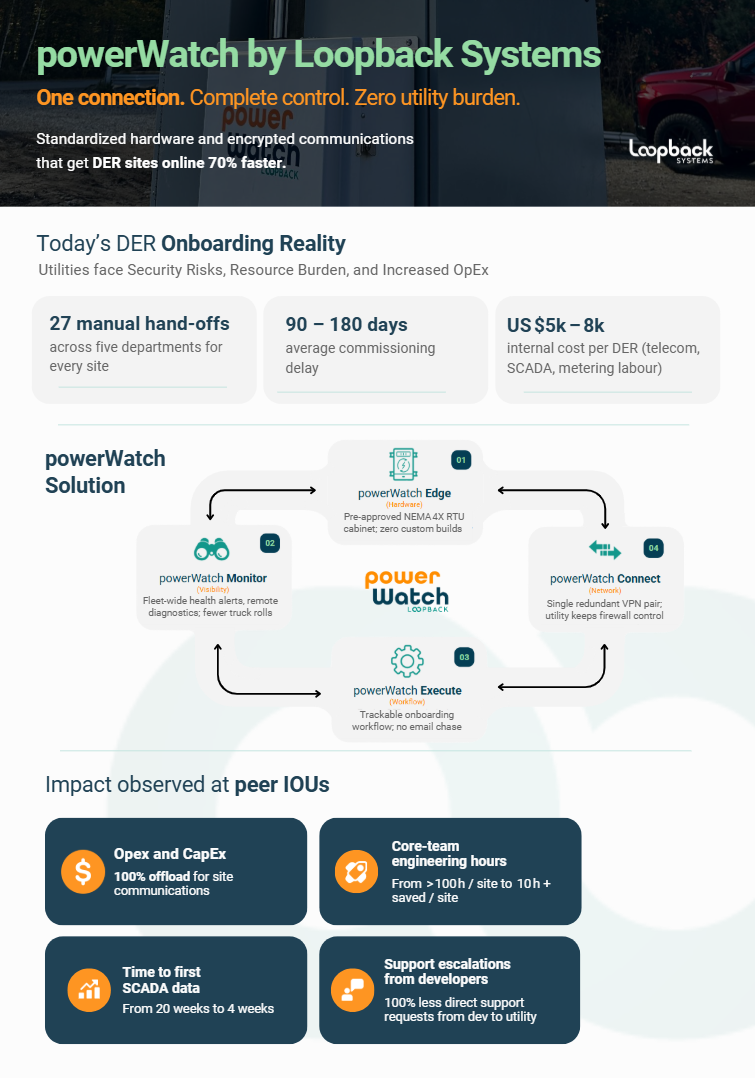
Loopback cut weeks from pilot deployments by removing site-by-site configuration. The real benefit wasn’t speed, it was capacity returned to engineers and operators.
In this frame, pre-validated configurations, pre-tested firmware, and clear commissioning scripts remove friction and let utility teams deliver faster with the same staff.
“Successful vendors don’t sell technology; they help the utility buy it. That's how the win the world’s slowest relay race."
Selling the "utility-ready" pilot
Every proposal must survive rounds of internal and external validation before it can move forward into a pilot, until it is deemed “Utility-ready” - which means: standards-first integration, operational risk reduced, and timing that matches existing inertia.
Between a pilot’s inception and it’s approval sits a translation chain:
- A sponsor forms intent inside the utility.
- A committee tests that intent against risk, reliability, and policy.
- Procurement turns it into a compliant path to award.
- Finance and regulators align spend with cost recovery.
- Operations inherits the outcome and risk.
Each link is a rational step within the utility’s mission to keep power safe and affordable.
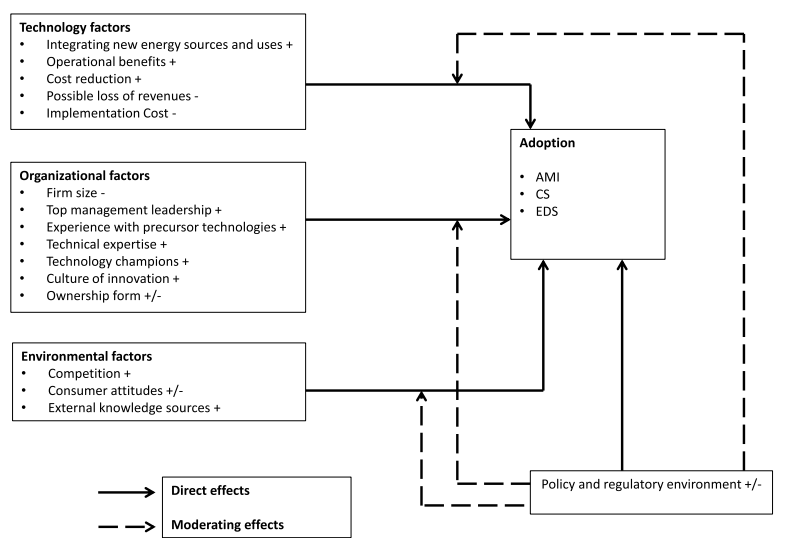
But every missed link resets the clock. As Syracuse University’s iSchool shows, even large utilities face internal inertia and multi-year adoption delays for new grid technology.
So what can innovators do to help utilities de-risk procurement and move ahead with confidence? According to the Electric Power Research Institute, there are 3 top causes of pilot failures:
- Organizational silos
- Unclear ownership
- Integration debt
It's easy to imagine why. When utility personas are broad, they speak a mixed dialect of risk and reward. That includes Operations, OT Security, Regulatory & Legal, Finance & Planning, and Project Management Office (PMO) Leadership.
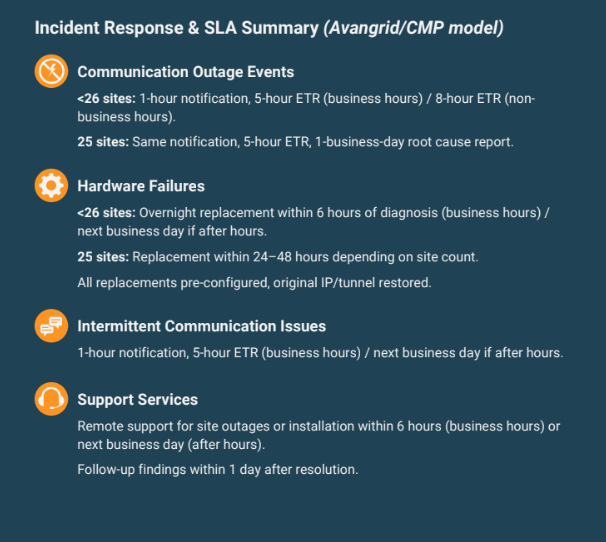
That means that your pitch needs to address the needs of individual roles, and translating for each of these can shorten decision time, and increases the likelihood of adoption.
The first step is to build strong buyer personas for each seat at the table, following the process
1. Identify roles, looking for archetypes like decision-makers, influence users. You can see the full guide on defining and mapping your buyers in our guide here, which includes a downloadable template.
2. List relevant goals and the challenges or pain points in fulfilling these. Start by looking at all, then narrow down to those you can help with. Sometimes 3 problems are really 1 problem.
#3 Relate the benefits of your product in how they address these specific pain points and help your buyers achieve their goals.
And, as explained by the Smart Electric Power Alliance’s Grid Modernization Framework, utilities choose to advance pilots that are viable across these departments, including tech, policy, customer strategy, and business model.

“Departments aren't blocking us; they’re guarding reliability. Translation earns you allies.”
Ultimately, all pilots above a certain size must make it past the CFO. So, with language make sure to craft a CFO-first story. This means modelling current losses and showing how your solution reduces them under the utility’s own tariff structure. Use their math.
Now, before you enter your own Moneyball season, chant with me 🧘♂️
The 7 Immutable laws of Grid-Tech Sales
- Capacity and wires still decide the outcome. The grid may be digitalizing, but physics has not changed. If a region has no capacity constraint, no amount of enthusiasm will create a deal. Always check grid congestion, planned upgrades, and regional capacity margins before investing resources.
- Start with the territory map
Highlight retiring assets, congestion zones, and loss-making pockets. Overlay incentive programs and rate-case data to understand where economic pressure already exists. This is where your product has natural traction. - Go where the balance sheet hurts. Follow the pain. Territories with retiring peaker plants, stranded coal assets, or negative-margin industrial customers are fertile ground. These are the regions where your value proposition translates directly into savings. Utilities buy to protect the balance sheet.
- Design a self-funding pilot. Keep scope tight, measurement clear, and define explicit success criteria. This reduces perceived risk and builds a bridge from pilot to program.
- Stay aligned to the roadmap. Ask early: “Where does this reduce today’s pain in your service territory?” That single question re-centers the discussion on their world.
- Remember who signs. Innovation teams open doors but rarely close them. While valuable allies, they are not the ones who sign contracts or scale operations. Schedule check-ins with the real P&L owner before a pilot begins, and agree on what success must look like for a handoff into operations.
- Win one region, then replicate. Utility markets reward repeatability. A single regional success can open five more if you document the results and learn from them. There’s no need to spray and pray. Test and learn.
Still with me? Good. Because now it gets really interesting…
- Next up: learn about the 5 utility buying signals for grid tech
- Or, if you already have signals, learn how to turn them into strategy here.
At Cleantech Growthlab, these approaches have been our north star in covering the distance between innovation and adoption. We hope they help you too.
Ready to See Your Own Moneyball Stats?
If you’d like to see which utilities are most active in your segment, book a quick consultation and we’ll show you your current season’s scorecard. We offer a free 30-minute review that maps your offer against live utility signals.
Stay in the loop
Follow us on LinkedIn for more industry insights and resources to help increase your ROI.