Cold email outreach is a powerful way to start new conversations with potential clients, especially in technical fields like clean energy.
By sending well crafted, personalized emails to the right prospects, you can drive engagement even when your targeted audience hasn't heard of you before.
Outbound prospecting gives you control of the conversation and lets you gather quick feedback since you’re proactively reaching out.
To succeed, you need a structured process, from research and segmentation to crafting compelling messages and tracking results.
Here’s a proven, practical, step by step guide to building a cold email campaign that drives more meetings, more conversations, and real B2B opportunities to scale growth strategically.
Step 1: Research the Market and Identify Pain Points
First, get to know your audience deeply. Research your target industry and learn what challenges companies are facing. Talk to existing customers, read industry reports, or scan forums and LinkedIn groups in your niche cleantech space.
Understanding pain points, the problems your prospects want to solve is crucial. It lets you speak directly to their needs in your emails.
For example, a wind farm operator might worry about efficiency and maintenance costs while a solar installer might struggle with regulatory compliance.
Identifying these issues up front helps ensure your outreach feels relevant from the very first sentence.
Pro Tip: Create a short list of key insights. For each target audience, write down the top 3 pain points you discover. Use these insights in the next steps to frame the value your solution brings.
Here’s a quick template to learn more on: Cleantech Ideal Customer Profile [TEMPLATE]
Step 2: Build Buyer Personas and Segment Your Targets
Once you have mapped out common pain points, it’s time to create buyer personas, fictional yet realistic profiles of your ideal customers. A persona might include their title, for eg: Operations Manager at a mid size solar company, include their goals, challenges, and decision criteria.
You can use this below persona matrix to structure your insights and build a clear picture of who you want to reach out to.
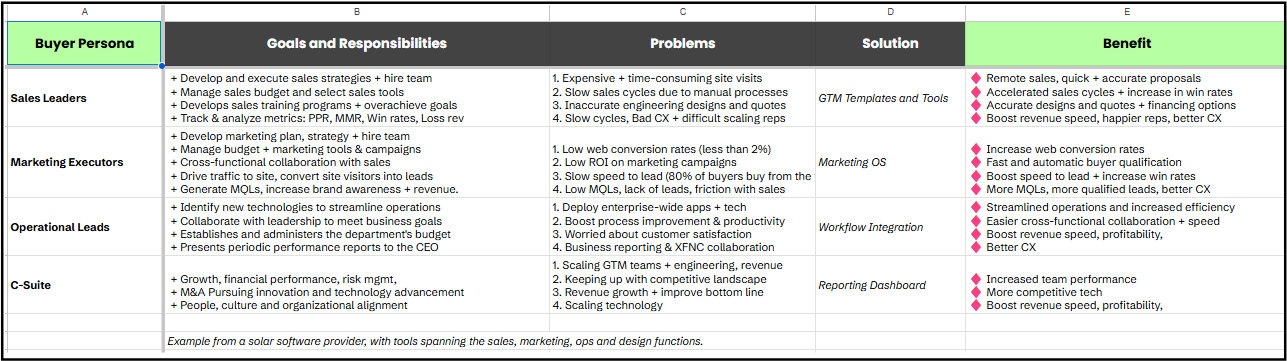
The best personas feel real. For example:
- Emily, the CTO of a wind turbine manufacturer who cares about reliability and ROI.
- Carlos, the VP of Engineering at an EV charging startup focused on scalability and uptime.
Detailed personas like these help you craft sharper, more relevant messages that actually resonate.
Dive deeper into our comprehensive guide on crafting B2B cleantech buyer personas here.
Step 3: Build a Multi Channel Messaging Sequence
A sequence is a planned series of touches, combining email, LinkedIn, or other channels spread over a few weeks.
A multichannel approach often works better than email alone. Here’s an example:
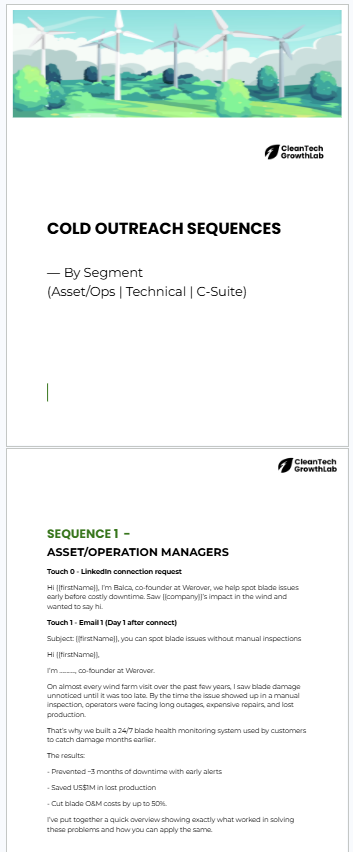
LinkedIn Connect: Send a short, friendly LinkedIn connection request referencing something about the person or company.
For example: “Hi [Name], I saw [Company]’s recent project on solar farms. I’d love to connect and learn more about your work.” This is a soft first touch that helps you connect with your industry folks.
First Email: A day or two later, send a personalized email introducing yourself, mentioning a relevant pain point, and sharing a quick value proposition or a case story. Keep it short, helpful, and not overly salesy.
For instance, “We recently helped a wind farm reduce downtime by 20% with our predictive maintenance software, would you like to know how?’’
Follow Up Email(s): If there’s no response, send one or more follow ups. Space them out by several days.
Each follow up can add new value, maybe share a white paper link, a testimonial, or a brief case study, and always include a clear call to action like “Are you available for a quick 10 minute call next week?”
Alternate your approach and messaging in each step: for example, rotate between highlighting cost savings and emphasizing safety improvements as key benefits, to see what resonates.
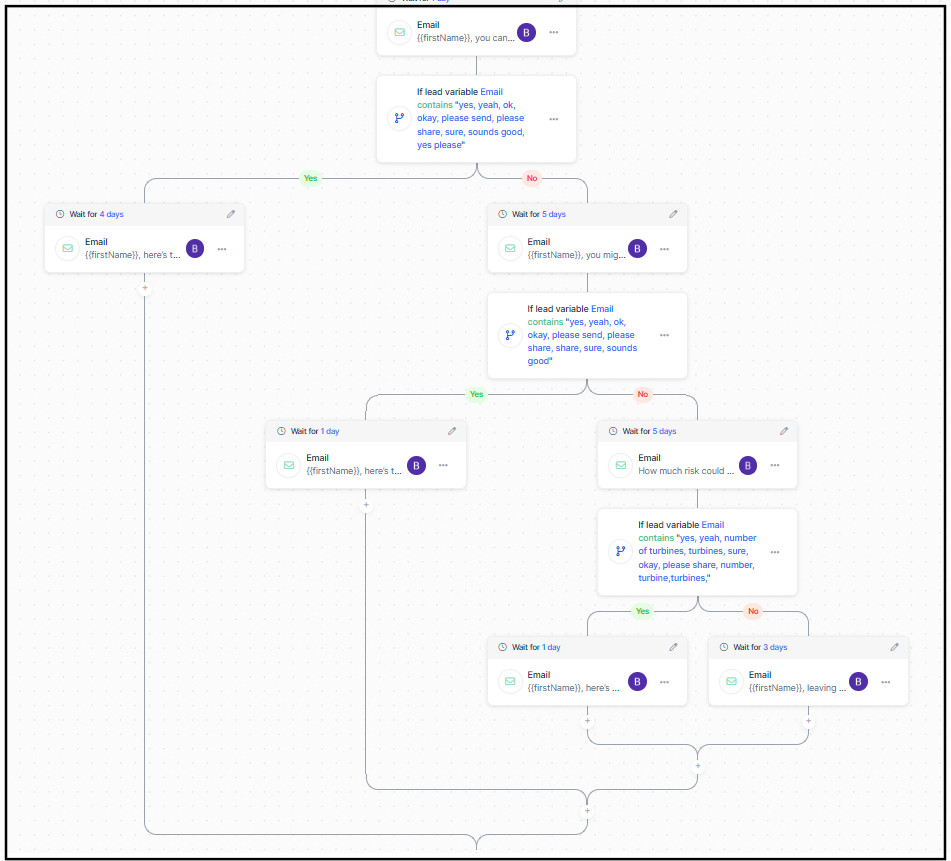
Importantly, use routing logic in your sequence: if the prospect replies at any step, stop the automated campaign for them (so you can respond personally).
If they don’t reply to the first email, trigger the next follow-up in a few days. This way, each lead follows a logical path.
For instance: No reply? Move to the next email, replied positively? Hand it off to sales and stop automated follow ups.
Pro tip: Stay human, even with automation, make every message feel personal and genuine.
Small touches like personalized fields or a quick LinkedIn visit can make your outreach feel natural and not robotic.
Step 4: Build an ABM List
Next, compile a list of target companies that match your ideal customer profile. Focus on the specific industry niches and regions you want.
Sales intelligence tools make this process faster and more precise. Platforms like Apollo.io or LinkedIn Sales Navigator let you filter companies by industry, size, location, or other criteria, helping you zero in on the most relevant prospects.
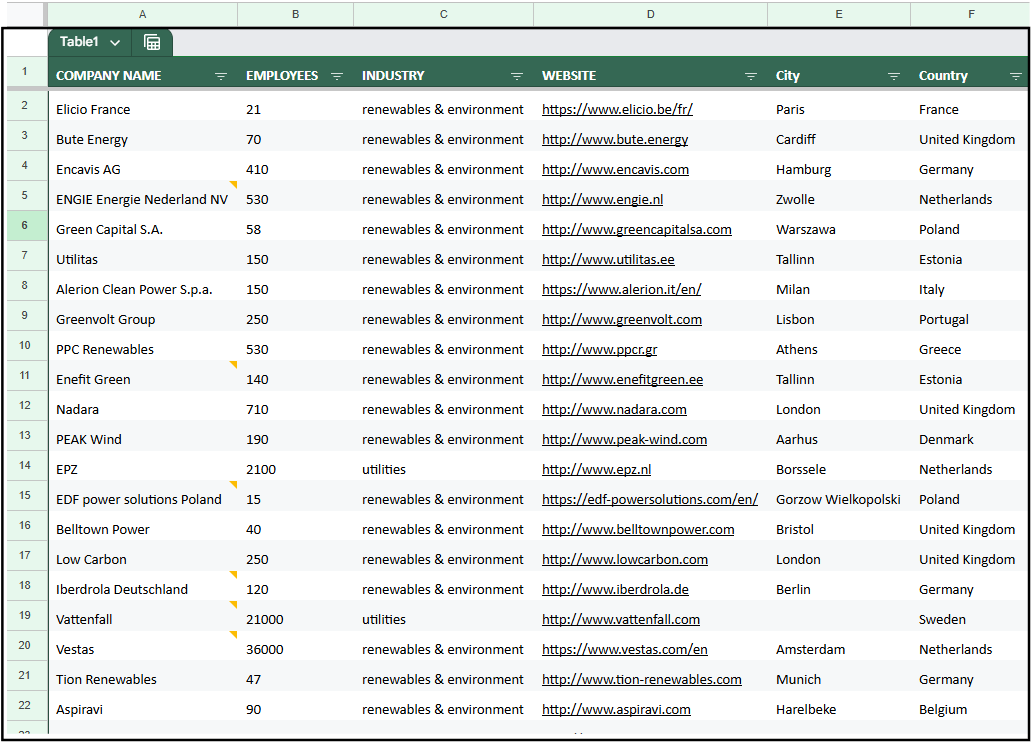
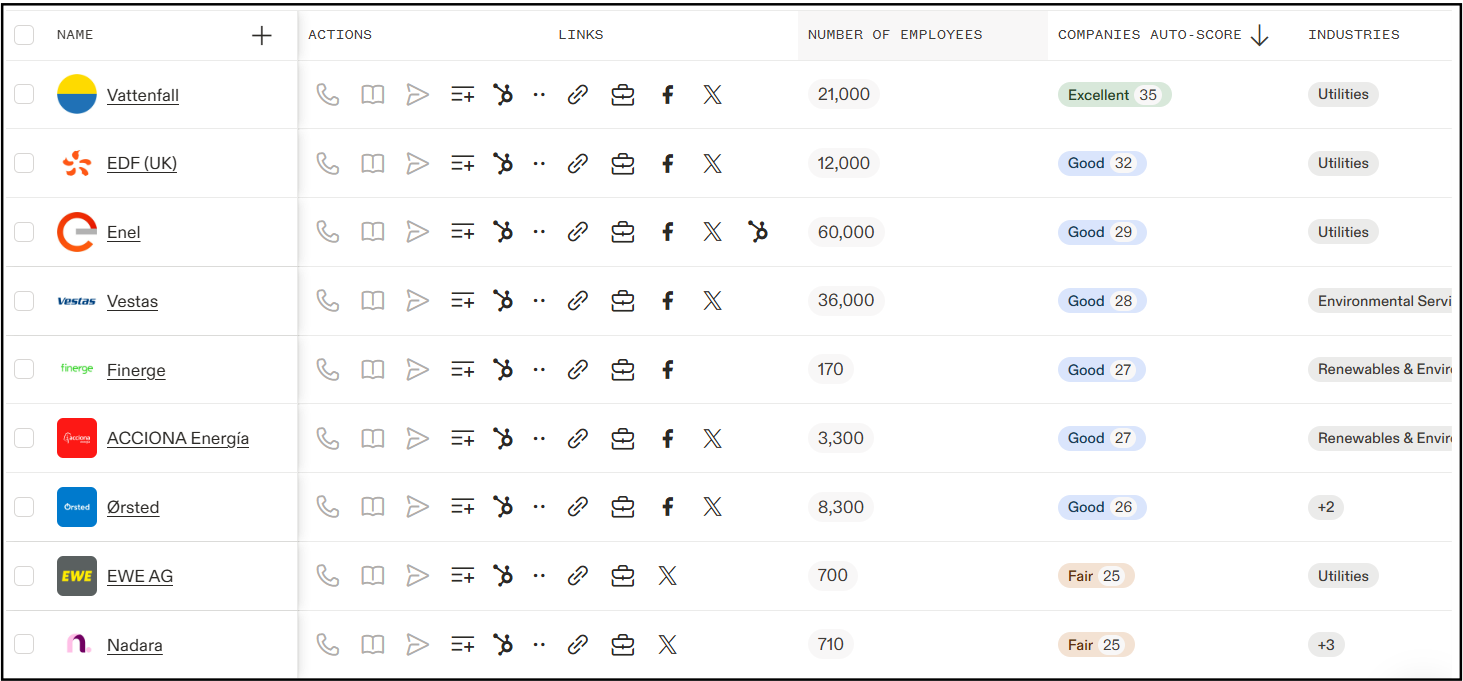
Use these filters strategically. For example, if your solution focuses on battery storage, target “energy storage providers” or “utility scale battery manufacturers.”
This ensures your list aligns with the markets most likely to benefit from what you offer.
Once you have refined your search, identify 20 - 40 high-priority accounts, companies where you’d most like to win business.
These should receive extra personalized outreach.
Now your company list is ready, you’ll gather actual person contacts in the next step. But defining the right companies first ensures your outreach stays focused on potential clients rather than a random mass of leads.
Step 5: Gather, Clean and Organize Leads
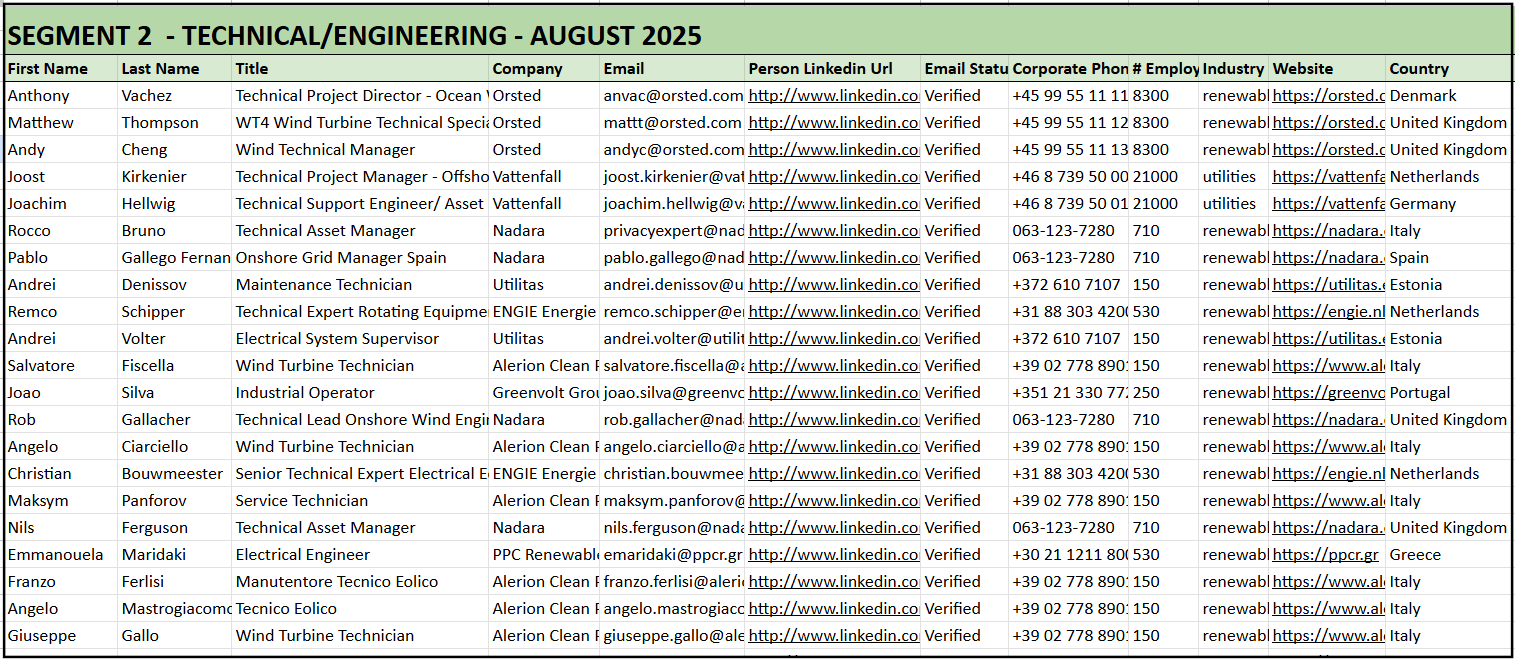
Once you have identified target companies, find the right contacts within them.
Look for decision makers and influencers who match your buyer personas such as CTOs, Operations Heads, or Sustainability Managers. Export their details (name, title, company, and email) using lead generation tools or platforms like LinkedIn or Apollo.io.
Then, clean your list by removing duplicates, verifying emails, and organizing contacts into relevant segments.
This ensures higher deliverability and makes it easier to send the right message to the right person.
Step 6: Set Up and Warm Up Your Sending Domain
Before launching your campaign, make sure your technical setup supports good deliverability.
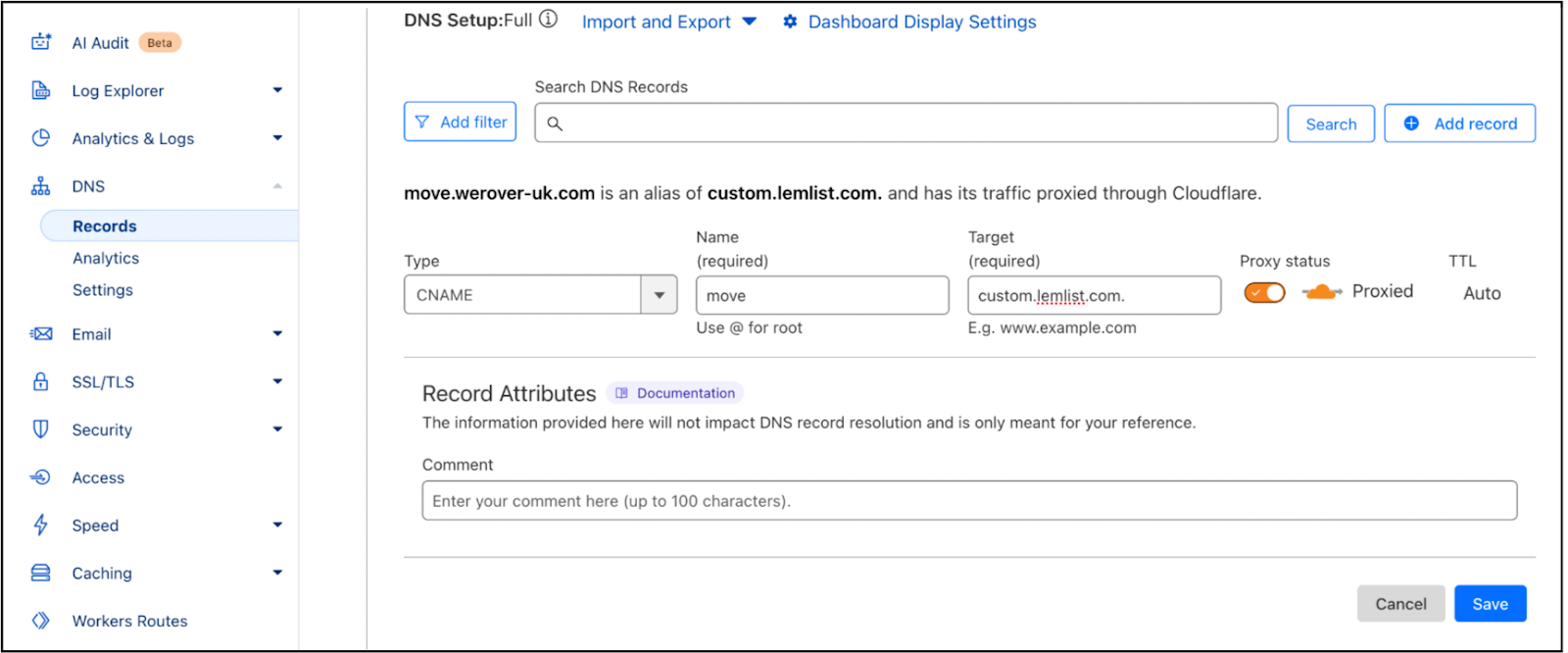
- Use a separate domain or subdomain for outreach.
- Authenticate it with SPF, DKIM, and DMARC records.
- Gradually warm up your domain by sending small batches of emails over a few weeks to build a positive sender reputation.
This step is crucial to prevent your messages from landing in spam and to establish a healthy sending reputation from day one.
Step 7: Configure and Launch Your Campaign
Once your data and sequences are ready, it’s time to bring everything together in your outreach platform and Lemlist is one of the best tools for this.
Import your segmented lead lists and configure the key elements of your campaign:
- The email sequence and timing: Set up your planned series of emails and define the time gaps between each step. A well timed cadence, for eg:3 - 5 days between messages helps you stay visible without overwhelming your prospects.
- Personalization tags (like {{firstName}} or {{companyName}}): Use dynamic fields to make each email feel personal and genuine. Even small touches like referencing a company’s latest project or mentioning their location can boost engagement.
- Sending limits per day: Start with a modest number of emails per day for eg:50 - 100, and gradually increase as your domain reputation grows. This steady scale up helps protect deliverability.
If you’re using a CRM like HubSpot, integrate it with your outreach tool so replies, positive responses, and new leads flow automatically into the database.
Step 8: Engage, Track, and Optimize
With your sequences running, the real work begins: monitoring, responding, and iterating.
- Respond Quickly: When a prospect replies or shows interest, respond promptly and personally. The goal of your campaign is to start conversations. Make sure each reply gets a thoughtful answer and is navigated towards a booked meeting.
- Keep the pipeline fresh: Don’t stop at one list. Add new contacts regularly (for example, 300 new leads per month is a good move) so you always have fresh people to email. This keeps response rates from declining due to list exhaustion.
- Track key metrics: Use your outreach tool’s dashboard to watch open rates, reply rates, and engagement. Because your tool is integrated with CRM, you can also see higher level metrics (e.g. how many replies turned into qualified leads or demos). Review these weekly and monthly to plan your next moves.
- Analyze and adapt: Use the data to refine your strategy. If one persona or industry segment is responding better than others, consider focusing more on them. Switch out underperforming subject lines or email hooks.
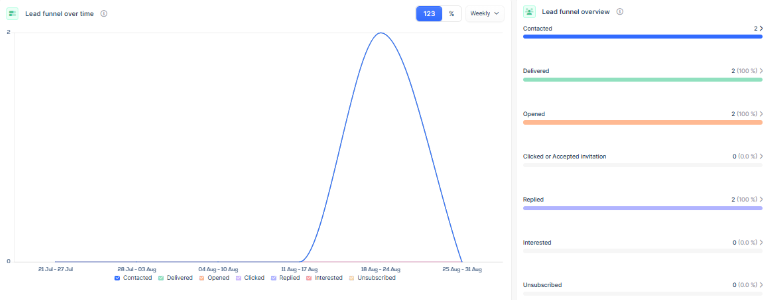
By looping through this cycle of send - analyze - adjust, your cold email engine will get stronger over time. Remember to keep documentation of what you test and learn, so insights aren’t lost.
With consistent execution and optimization, your outbound campaign will steadily generate conversations and leads.
Bringing it all together
A well structured cold email campaign combines research, personalization, and smart automation. For cleantech, it’s one of the fastest, most cost effective ways to reach decision makers, start meaningful conversations, and generate real opportunities.
When done right, outbound cold emailing isn’t “cold” at all, it’s the start of warm, relevant conversations that drive long term growth.
Want to skip the tedious setup and focus on scaling your impact?
Let’s have a quick chat where we’ll guide you through what leaders in the space are doing and help bring it to life with focus, efficiency, and proven expertise.
Stay in the loop
Follow us on LinkedIn for more industry insights and resources to help increase your ROI.